Qasr al-Labekha
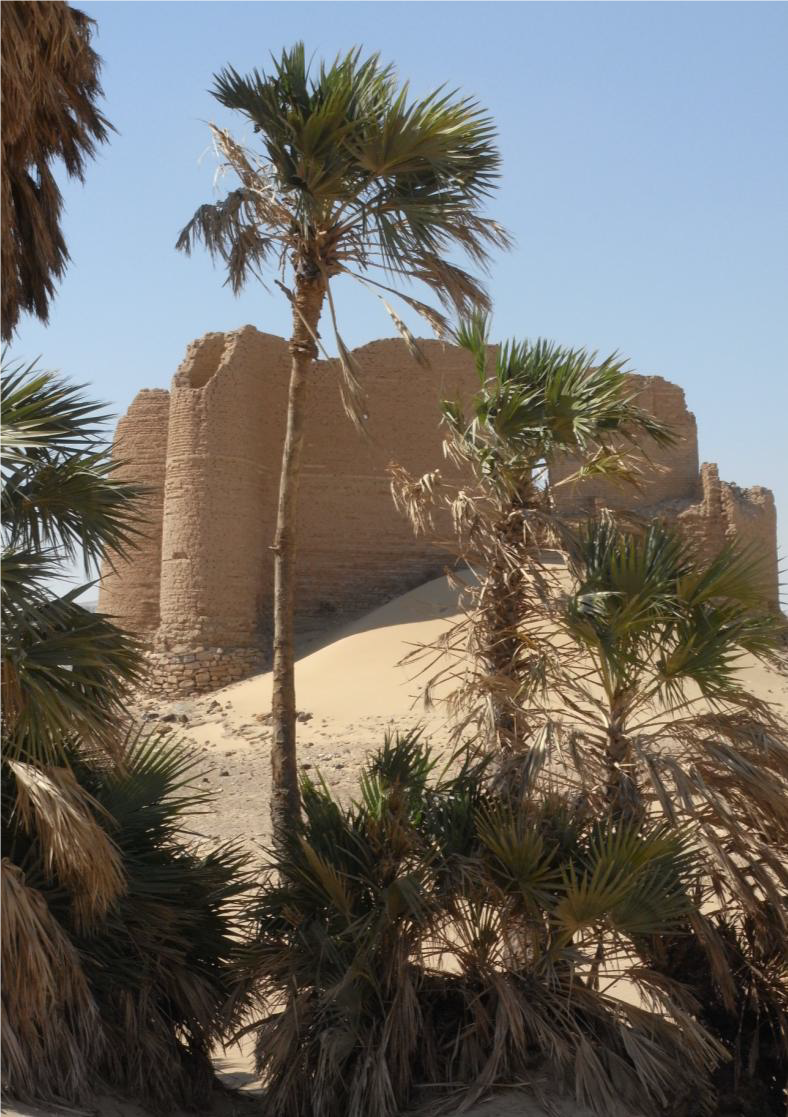
Qasr al-Labekha is one of the most spectacular forts and temples in Kharga andone of the largest settlements in the Kharga oasis in the Roman period.It was in use from at least the Ptolemaic period until the 4th century AD. The large fortress housed a garrison and guarded the Darb Ain Amur, the main route to Dakhla. The mudbrick fortress has door posts and a lintel of limestone and each corner is fortified by a round tower. Some of the walls are still preserved to a height of 12 meters (38 foot). The interior is filled with sand, but it is accessible by a door in the eastern wall. The site also contains two temples, aqueducts, remains of the settlement and a necropolis. To the north of the fortress is a mudbrick temple from the 3rd century AD. Inside is a great hall leading to an antechamber and a sanctuary in the western end. The doorway between the hall and the antechamber still has a cornice painted in red, blue, green and black. Today a few traces of decoration remains, but during clearance of the temple a number of limestone fragments inscribed with the title Caesarand referring to Amun were found. There is an altar in the western part of the hall and a gate outside the temple leads to an underground chamber. A staircase may have given access to the roof. About 250 m to the south is a rock sanctuary that may have originally been the tomb of a local man called Piyiris who was deified after his death. The tomb consists of two pits with two connected antechambers. Another sanctuary is partly hewn out of the rock and partly constructed of mudbrick, and also preceded by two halls. In the necropolis west of the fortress are tombs from the Ptolemaic and Roman periods. They contained wooden statues, jewellery, amulets and fragments of funerary masks (CISS Inventory 2010; Vivian, 1990).